
Past-Producing Gold Mines in Ontario
With gold trading near US$4,150/oz through Q4 2025, mines that closed at $300 gold are economic again. Ontario hosts dozens of past-producing gold mines that ran intermittently through the 20th century, then closed when grades dropped below cut-off, mills aged out, or commodity prices collapsed. A meaningful subset is now being brought back online by operators who picked up the assets cheap during the previous cycle and are taking advantage of higher prices, lower expectations, and lessons learned from prior failures.
This page covers the most material restarts and reactivations in Ontario through 2025-2026 – what produced before, what’s producing now, who operates them, and what the economics look like. It is reference material, not a stock recommendation.
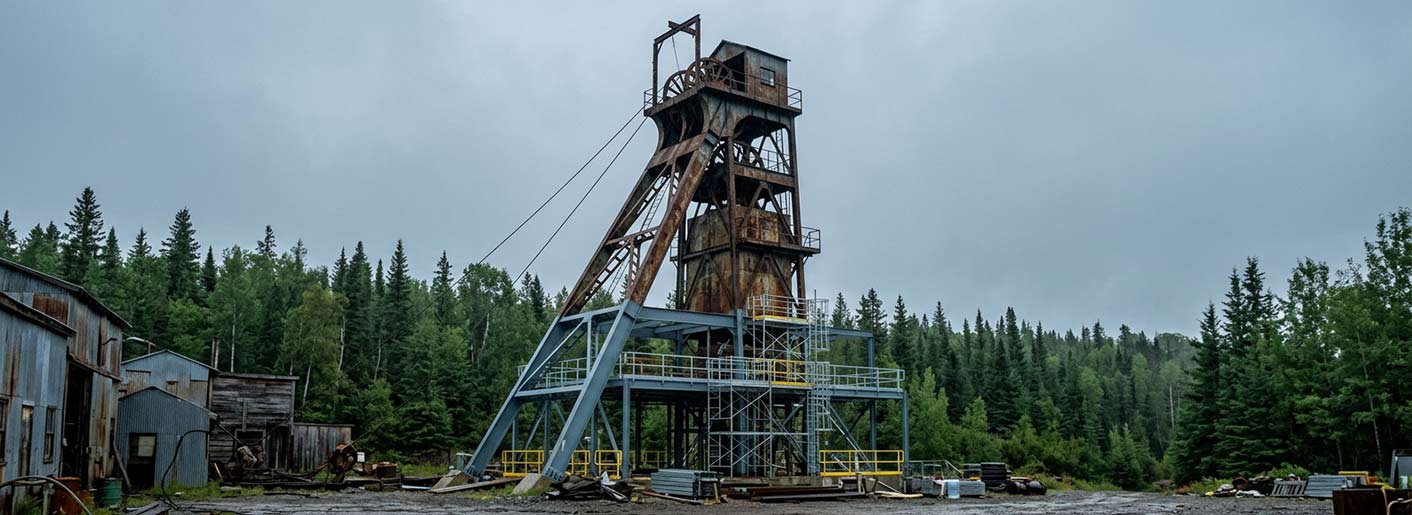
Why past-producing mines come back
Past-producing mines have one structural advantage: most of the de-risking is done. The geology has been mapped. Tailings facilities exist. Mill foundations remain. Power lines reach the site. Permits, while not always current, were issued at some point. A new operator restarting a 1940s mine starts at maybe 30-50% of the capital cost and 40-70% of the timeline of a comparable greenfield development.
The disadvantages are real too. Old data is unevenly reliable. Tailings ponds may need expensive remediation. Underground workings flood and collapse. Mining methods that worked at $35/oz gold may not transfer to modern safety standards. And the geological reasons the previous operator failed – narrow vein widths, erratic continuity, refractory metallurgy – don’t go away just because the gold price is higher.
| Advantage of restart | Risk of restart |
|---|---|
| Existing infrastructure (mill, tailings, power) | Aging infrastructure may need full replacement |
| Permit history shortens approvals | Permits may have lapsed or new standards apply |
| Existing geological data | Old data quality varies widely; legacy logs unreliable |
| Lower capex than greenfield | Underground works may need rehabilitation, dewatering |
| Local workforce and community familiarity | Community memory of past closures can erode trust |
| Faster path to production | Same geological reasons that closed the mine apply |
Madsen – the headline 2026 restart
The Madsen Mine, in the Red Lake gold district of northwestern Ontario, is the textbook 2026 case. It operated intermittently from 1938 through 1976, again from 1997 to 1999, and most recently from 2021 to 2022 under Pure Gold Mining. Pure Gold spent over $350 million on permitting, 200+ kilometres of drilling, mine engineering, a brand-new mill, and underground access before insolvency. Total historic production: about 2.5 million ounces between 1938 and 1999.
West Red Lake Gold Mines (TSXV: WRLG; OTCQB: WRLGF) acquired Madsen in June 2023 for $6.5 million in cash through a court-ordered sale process. The May 2025 restart announcement targeted 500 tonnes per day initially, ramping through the year. The first gold pour came in mid-2025.
“Achieving commercial production is a major milestone for any producer, and it comes after a strong December that saw tonnage, grade, recoveries, and production all perform to plan.”
– Shane Williams, President and CEO, West Red Lake Gold Mines (Jan 12, 2026)
West Red Lake declared commercial production at Madsen on January 1, 2026 – seven months after completing its bulk sample. December 2025 numbers: mill operating at 86% of permitted 800 tpd capacity, 94.6% gold recoveries, 3,215 ounces produced for the month. Q4 2025 revenue: US$30 million at an average realized price of US$4,150/oz.
The technical difference between West Red Lake’s approach and Pure Gold’s deserves attention because it explains why this restart appears more durable. Red Lake gold mineralization is hosted in narrow, high-grade veins. Reliable mining requires drill spacing tight enough to map the geology in detail. The local rule of thumb is 7-metre spacing. Pure Gold’s spacing was 20 metres – too wide for the geological complexity. West Red Lake tightened spacing to 6 metres and completed 90,000 metres of definition drilling before restart. The first 18 months of mining is mapped at 100,000 ounces of recovered gold, with two years of mining runway in inventory at the time of restart.
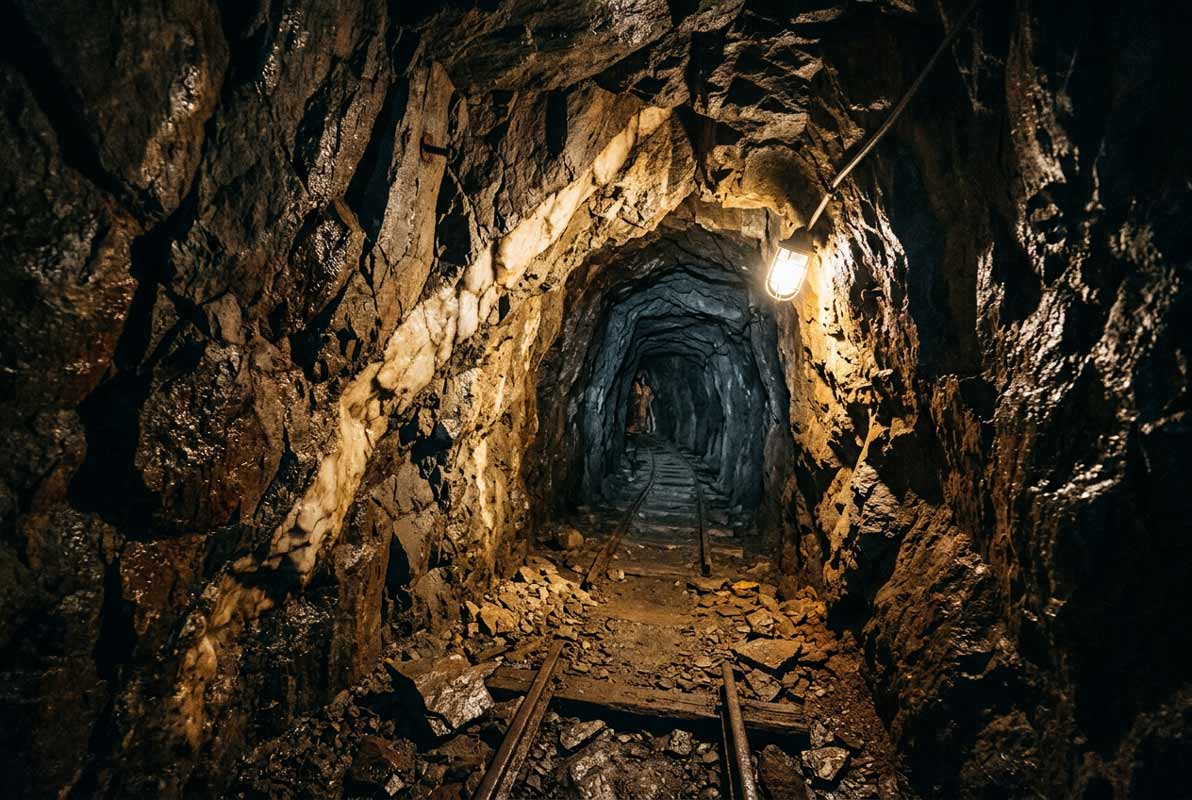
Other Ontario restarts and reactivations
Beyond Madsen, several Ontario gold operations changed hands, restarted, or moved into pre-restart engineering through 2025-2026. The patterns differ – some are clean ownership transitions of producing mines, others are full reactivations of dormant assets, and a few sit in the middle with rebuild engineering still underway. The four sub-sections below cover the most material cases plus the broader trend in tailings reprocessing, which has quietly become one of the more economic ways to extract residual gold from legacy Ontario mining sites at current price levels.
Hemlo – ownership change rather than restart
Hemlo, near Marathon on the north shore of Lake Superior, is technically not a restart – it has been continuously producing since the early 1980s. But the November 2025 ownership change deserves the same analytical attention as a restart. Carcetti Capital – now Hemlo Mining Corp. (TSXV: HMMC) – acquired the mine from Barrick for up to US$1.1 billion. Full-year 2025 production: 143,458 ounces, the highest from the camp in four years.
The new operator is transitioning to an owner-operator model with Manroc Developments continuing Alimak mining during the transition. Available capacity remains at 7,100 tonnes per day hoisting and 10,000 tonnes per day milling – meaningful headroom relative to current throughput.
Magino – the 2024 restart that ramped through 2025
Magino, near Wawa, restarted in 2024 under Argonaut Gold (now part of Alamos Gold after the September 2024 merger). The mine sits adjacent to Alamos’ Island Gold operations, and the two are now planned for joint expansion to 18,000 tonnes per day milling rates from the current 12,400. Phase 3 expansion includes shaft development. Combined Island Gold + Magino produced 190,400 ounces in the first nine months of 2025.
Sugar Zone – preparing for restart
Vault Minerals’ Sugar Zone Mine, in northwestern Ontario, has released a mineral reserve of 1.9 million tonnes grading 5.2 g/t for 325,000 ounces, plus a 4.8 million tonne mineral resource at 8.2 g/t for 1.28 million ounces. Restart timing has not been announced as of early 2026.
Tailings reprocessing – the quiet trend
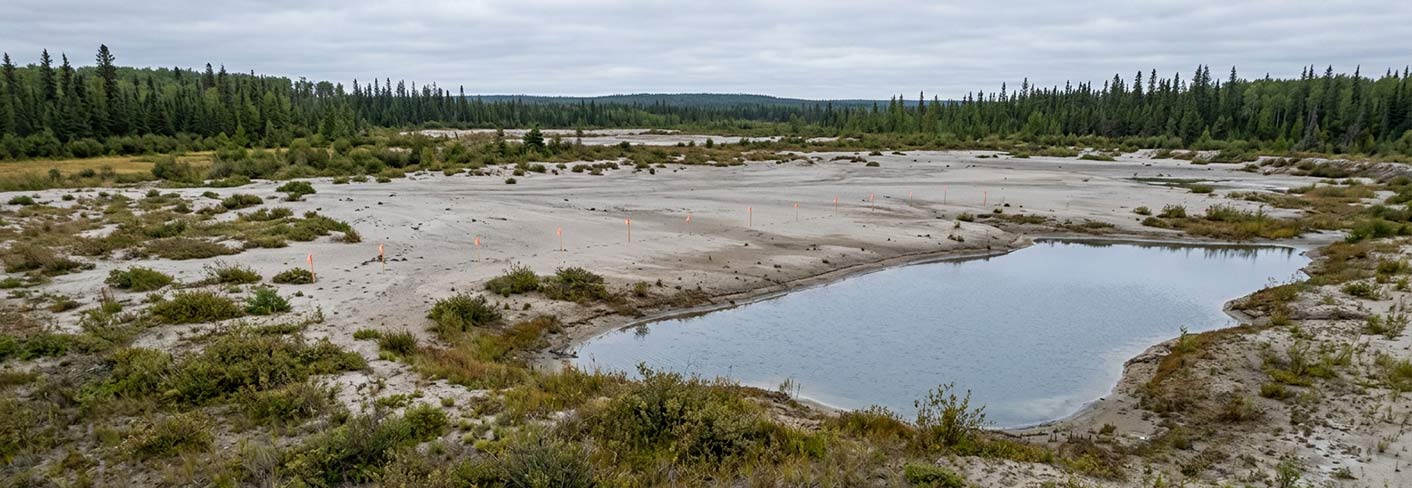
New Ontario provincial legislation introduced July 1, 2025 encourages cleanup of legacy mine waste sites. The combination of remediation incentives and gold prices above $4,000 makes reprocessing historic tailings economic in many Ontario camps. Thunder Bay’s Kane and Associates partnered with Fulcrum Metals on a Northern Ontario assessment of historic tailings and waste rock for gold recovery – work informed by the same OGS data that drives greenfield exploration.
The producing past-producers – quick reference
| Mine | Region | Operator | 2025 status |
|---|---|---|---|
| Madsen | Red Lake | West Red Lake Gold (TSXV: WRLG) | Commercial production Jan 1, 2026 |
| Hemlo | Marathon | Hemlo Mining Corp. (TSXV: HMMC) | 143,458 oz in 2025; new owner from Nov 2025 |
| Magino | Wawa | Alamos Gold | Ramping; combined w/ Island Gold |
| Island Gold | Wawa area | Alamos Gold | Producing; Phase 3 expansion underway |
| Detour Lake | Northeastern ON | Agnico Eagle | 677,466 oz in 2023; targeting 1 Moz/yr by 2030 |
| Red Lake Mine | Red Lake | Evolution Mining | 125,000-150,000 oz 2025 guidance |
| Sugar Zone | Northwestern ON | Vault Minerals | Reserves released; restart pending |
| Sopha-Miller | Sault Ste. Marie | Various; historic | Trenching and prospecting; not in production |
Outside Ontario’s gold-specific restarts, the broader past-producing reactivation story includes copper-zinc and base metals projects – Hudbay Minerals’ Snow Lake camp in Manitoba is a comparable restart story driven by copper-zinc economics rather than gold. Pan American Silver’s Escobal silver mine in Guatemala remains in suspended status while litigation works through Guatemalan courts. The pattern is industry-wide: assets that closed at lower commodity prices re-enter feasibility studies when the price deck shifts.
How to read a restart announcement
Mine restart announcements share patterns. Operators emphasize the historical production figure (“more than 2.5 million ounces produced from 1938 to 1999”) and the existing infrastructure. They downplay the reasons the mine closed previously. Independent observers should focus on different signals:
- What’s the cut-off grade vs the previous operator? A mine reopening at $4,000 gold with a 2 g/t cut-off when it last closed at 4 g/t is not the same project.
- Has metallurgical test work been redone? Older mines often have refractory ore requiring more complex processing than the historic mill handled.
- Drill spacing and resource confidence. Madsen’s lesson is general – narrow-vein deposits need tighter drill spacing than bulk-tonnage operations.
- Cash position and runway. Restart capex inflation is the rule, not the exception. 18+ months of cash without dilution is the analyst comfort threshold.
- Permitting status. “Fully permitted” claims should be checked against actual current Ministry of Mines holdings and conditions.
Why this matters for the broader sector
The reactivation wave is changing the supply-side picture for Canadian gold. Madsen, Magino and the Equinox/Calibre consolidation each add 50,000-300,000 ounces of annual production. Cumulatively, Ontario’s 2025 gold production was up against 2023-2024 levels even before the new mines fully ramp. For the junior sector, restarts also signal a new path to value: rather than spending decades on grass-roots exploration, junior teams with operating experience are buying distressed past-producing assets, redoing the engineering, and bringing them back online in a few years rather than the 10-15 years standard for greenfield development.
Madsen production data from West Red Lake Gold press releases (May 2025 and January 2026), mining.com, and CIM Magazine. Hemlo data from Hemlo Mining Corp. (TSXV: HMMC) February 2026 release on JuniorMiningNetwork. Northwestern Ontario production figures from CEDC Thunder Bay quarterly mining and exploration updates (Q1 2025 and fall/early winter 2025), authored by John Mason, D.Sc., P.Geo. Alamos Gold and Magino figures from Alamos disclosures. Detour Lake and Newmont divestiture data from public company filings. Provincial legacy tailings legislation referenced as introduced July 1, 2025.
Past producing gold mines Canada – wider picture
The past producing gold mines Canada inventory extends well beyond Ontario – Yukon’s Dublin Gulch district hosts Victoria Gold’s Eagle Mine; Newfoundland’s Valentine project sits on historic ground; Manitoba’s Lynn Lake camp is being reactivated by Alamos. The unifying theme: assets that once closed at lower gold prices are returning to economic life. Within Ontario, abandoned gold mines Ontario records compiled by the Ministry of Mines list hundreds of historic shafts and adits dating to the 1890s-1950s, many of which never reached modern resource definition. Tailings reprocessing legislation enacted July 1, 2025 has made even some of these legacy abandoned gold mines Ontario sites economically interesting again, particularly where mill records suggest under-recovery during the original mining era.
This domain was previously operated by Advance United Holdings, an issuer that built its strategy specifically around acquiring undervalued past-producing gold properties – the same theme this page covers. The prior site listed property submissions through a feature called www.advanceunited.ca/marketplace; that path is now redirected to the gold properties reference page. Visitors arriving via legacy “LEARN MORE” backlinks from older industry coverage will land on the relevant updated section here.