
Rare Earth Metals in Canada
Canada holds over 15 million tonnes of rare earth oxide resources – third largest in the world by Measured + Indicated category. Yet the U.S. Geological Survey’s 2025 Mineral Commodity Summaries still record Canada’s mine production of rare earths at zero. The country has spent decades sitting on world-class deposits while China consolidated more than 85% of global processing capacity. That equation is now changing – slowly, and with a lot of federal money behind it.
This page covers what rare earth metals are, why they matter, what Canada actually produces today, the active projects working toward production, and the processing build-out at the Saskatchewan Research Council. It is sector overview, not investment advice.
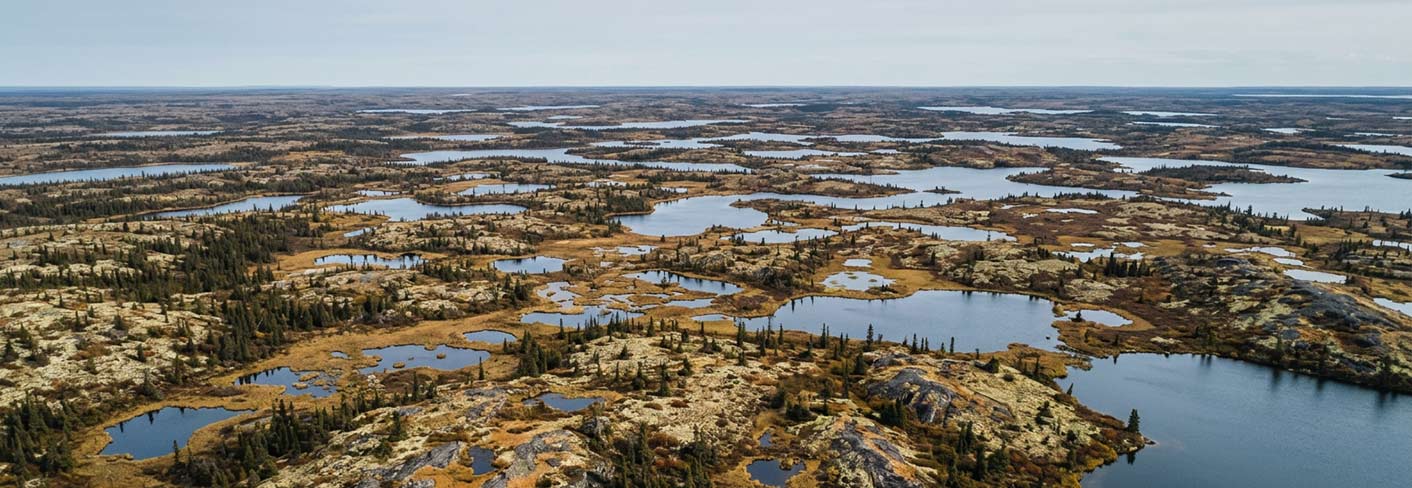
What rare earths actually are
“Rare earth elements” (REEs) are 17 chemically similar metals – the 15 lanthanides plus scandium and yttrium. They aren’t rare in the geological sense; they’re widely distributed in the Earth’s crust at low concentrations. What makes them rare in practical terms is that economic concentrations of the most valuable ones – neodymium, praseodymium, dysprosium, terbium – are uncommon, and the chemistry of separating individual rare earths from each other is technically demanding.
REEs split into two groups. Light rare earth elements (LREEs) include neodymium and praseodymium, which combine to form NdPr – the magnet feedstock that drives EV motors and wind turbines. Heavy rare earth elements (HREEs) include dysprosium and terbium, used in much smaller quantities but critical for high-temperature magnet performance and supplied almost entirely from China today.
| Element | Group | Primary use | Strategic profile |
|---|---|---|---|
| Neodymium (Nd) | Light | Permanent magnets (EVs, wind, defense) | Highest demand by value |
| Praseodymium (Pr) | Light | Permanent magnets (with Nd) | Co-mined with Nd as NdPr |
| Dysprosium (Dy) | Heavy | High-temperature magnet stability | Almost 100% Chinese supply |
| Terbium (Tb) | Heavy | High-performance magnets, phosphors | Critical, scarce outside China |
| Cerium (Ce) | Light | Catalysts, glass polishing | Abundant; less strategic |
| Lanthanum (La) | Light | Catalysts, optics | Abundant; less strategic |
| Europium (Eu) | Heavy | Display phosphors, banknote security | Tiny volumes, no substitutes |
Why this is a strategic priority
Coverage of the rare earths news cycle has been intense since China’s 2023 export controls on REE separation technology. The Mining Journal, mining.com, and specialised outlets like Rare Earth Exchanges run weekly updates on the sector.
China controls 85-90% of global rare earth processing and around 90% of metal production. The country also accounts for more than 90% of permanent magnet manufacturing, with integrated supply chains running from mine to finished magnet. In 2023 China imposed export controls on technologies for rare earth separation. The U.S. Defense Department invested in MP Materials at Mountain Pass under the Defense Production Act and, in July 2025, took an effective 15% stake in MP Materials with a guaranteed price floor for rare earth minerals and magnets.
Canada’s position changed in late 2025. The federal government designated certain critical minerals – including rare earths – as a national security priority under the Defence Production Act. In October 2025, under the country’s G7 Presidency, Canada announced over 20 investments and partnerships totalling $6.4 billion in critical minerals projects. Budget 2025 added $1.5 billion through the First and Last Mile Fund (2026-2030) and $2 billion over five years through the Critical Minerals Sovereign Fund.
The Saskatchewan Research Council facility
The Saskatchewan Research Council (SRC), a provincially funded R&D body, built a $74 million minerals-to-metals rare earth processing facility that became the first commercial-scale REE processing plant in North America. The facility produces magnet-grade neodymium praseodymium (NdPr) metal plus dysprosium and terbium oxides, with plans for full operation in 2027 producing 400-600 tonnes of NdPr metal annually – enough to power roughly 500,000 EVs per year.
“Since 2020, SRC has aimed to become a global leader in rare earth processing technology, and today we have proven out an industry model for future rare earth initiatives and supply chain development.”
– Mike Crabtree, President and CEO, Saskatchewan Research Council (Sept 2024)
In December 2025, SRC and U.S.-based REalloys Inc. signed offtake agreements positioning Saskatchewan as a North American magnet metals hub. The facility uses proprietary AI-controlled solvent extraction cells and metal smelting technology – both of which SRC is now considering for licensing to other operators.
| Stage | Capacity | Timeline |
|---|---|---|
| Hydrometallurgy | Operational | Online 2024 |
| Solvent extraction (separation) | Operational at demonstration scale | Online 2024 |
| Metal smelting (NdPr metal) | Operational at 10 tonnes/month, ramping to 40 | Online 2024 |
| Full commercial production | 400-600 tonnes NdPr metal/year + heavy REE oxides | Targeted 2027 |
Active rare earth mining projects in Canada
Canadian REE projects split into two geological groups: vein and pegmatite systems (Nechalacho, Strange Lake) and carbonatite complexes (Ashram, Wicheeda). The distinction matters – carbonatites typically carry a heavier weighting of light REEs (Nd, Pr, La, Ce), while vein-hosted systems often run richer in heavy REEs (Dy, Tb, Y). Five projects below cover the main names at different stages of advancement, with all resource and timing figures drawn from 2024-2025 public disclosures.
Nechalacho (Northwest Territories) – Vital Metals
The Nechalacho project, 110 kilometres east of Yellowknife, became Canada’s first rare earth producer when it shipped about 500 tonnes of high-grade concentrate in 2021 before operations were paused. Vital Metals released a January 2025 Mineral Resource Estimate for the Tardiff deposit at Nechalacho: 192.7 million tonnes at 1.3% TREO, containing 2.5 million tonnes of TREO and more than 636,000 tonnes of NdPr – plus a 578,000 tonne niobium oxide resource hosted in the same formations.
A July 2025 Scoping Study evaluated a hard-rock starter open pit extracting only 15% of the Tardiff resource. Indicated production: 56,000 tonnes of concentrate per year at 26.4% TREO and 3.3% Nb2O5 over an 11-year initial mine life. A Pre-Feasibility Study is on track for 2026.
Strange Lake (Quebec / Labrador border)
Strange Lake is one of the largest known heavy rare earth deposits outside China. It is particularly rich in dysprosium and terbium – the heavy REEs that magnet makers struggle to source elsewhere. Federal infrastructure funding announced in Budget 2025 supports the road access required to advance the project.
Ashram / Eldor (Quebec)
Ashram, in northern Quebec, is a giant carbonatite deposit with one of the world’s larger LREE resources at over 35 million tonnes at 1.45% TREO. Remote location remains the main hurdle. If developed, the project would be roughly Lynas-scale – comparable to the Australian operator that produces about 13,000 tonnes of REE per year.
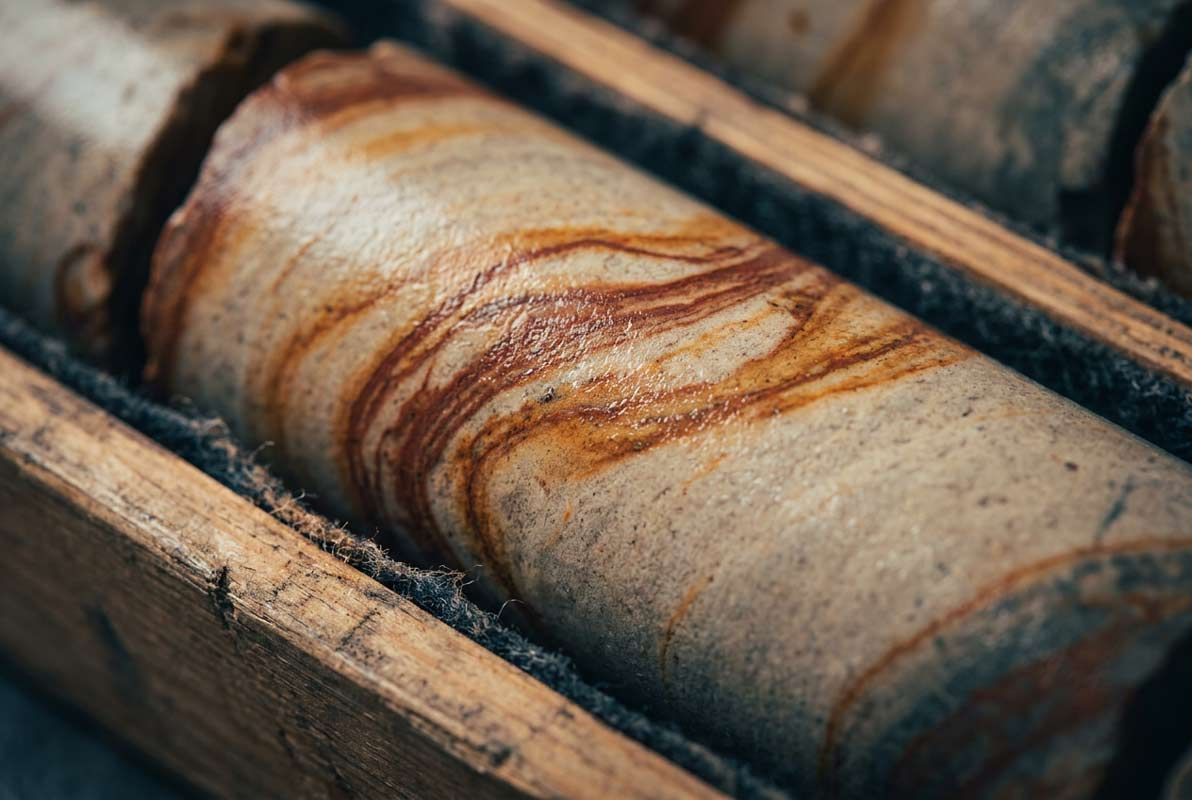
Foxtrot / Search Minerals (Labrador)
Search Minerals’ Foxtrot project in Labrador targets a balanced REE mix with high proportions of magnet metals. The 2025 Pre-Feasibility Study targets 3,200 tonnes per year of mixed REO over a 26-year mine life, with the project being integrated with U.S. processing rather than standalone Canadian magnet production.
| Project | Province / Territory | Operator | Stage |
|---|---|---|---|
| Nechalacho (Tardiff) | Northwest Territories | Vital Metals | PFS targeting 2026 |
| Strange Lake | Quebec / Labrador | Various; infrastructure-stage | Heavy REE focus, road funded 2025 |
| Ashram / Eldor | Quebec | Commerce Resources | Feasibility-stage carbonatite |
| Foxtrot | Labrador | Search Minerals | PFS, U.S. processing integration |
| Wicheeda | British Columbia | Defense Metals | PFS-stage REE/Nb deposit |
Why Canada is still at zero
The challenges are not geological. They’re about the middle of the supply chain – separation chemistry, metal smelting, and magnet manufacturing. Most Canadian projects depend on either Chinese processing expertise (now restricted) or alternative partners in Europe and Asia. Vital Metals’ original plan relied on Norwegian partners for final separation. The SRC build-out is the first attempt to do everything in one country at commercial scale.
Specific bottlenecks the sector is working through:
- Capital intensity. A working REE project needs $300M-$1B+ in capex, more than gold or copper juniors typically raise.
- Metallurgical complexity. Canadian ores often require novel processing routes; off-the-shelf flowsheets from China don’t always transfer.
- Talent shortage. Most REE chemists, metallurgists and magnet engineers work in China. Canadian universities are ramping up research, but the talent pipeline takes years.
- Magnet manufacturing gap. Canada has no NdFeB magnet production. Even when REEs are mined and refined here, magnets are still made offshore.
- Permitting timelines. Canadian permitting averages 10-15 years from discovery to production – five times Australia. PDAC and others have flagged this repeatedly.
What the U.S. is doing in parallel
MP Materials at Mountain Pass, California, is the only operating U.S. rare earth mine. The July 2025 Defense Department deal – $400 million in preferred shares plus warrants for additional common stock — gave the U.S. government an effective 15% stake and committed billions in additional spending and offtake. The deal includes a guaranteed price floor for rare earth minerals and magnets and funds construction of a new factory aimed at scaling U.S. magnet production beyond current capacity by 2028.
The U.S. and Canadian moves are coordinated. Bilateral cooperation agreements between Canada and the U.S. on critical minerals have been in place since 2020. Joint investments in 2024 funded Fortune Minerals (NWT) and Lomiko Metals (Quebec). Canada’s G7 Presidency in 2025 explicitly framed REE supply chain resilience as a multilateral priority.
What changes in 2026 and beyond
If projects stay on schedule, the rare earth industry update for the late 2020s looks like this: SRC reaches full operation in 2027 with 400-600 tonnes of NdPr metal annually plus heavy REE oxides; Nechalacho moves through PFS to construction; Strange Lake advances on the back of road infrastructure; one or two greenfield projects (Ashram, Wicheeda) reach financing decisions. Canada’s mine production goes from zero to a few thousand tonnes of REO annually by 2030.
That still leaves Canada small relative to China’s 270,000 tonnes of 2024 mine production. But the country goes from zero to a credible alternative supplier – particularly for magnet metals where the U.S. and Europe will pay premium prices for non-Chinese supply.
Adjacent commodity coverage
Rare earth news rarely travels alone in 2026 sector coverage. The same publications cover related streams: cobalt news (artisanal mining issues in DRC; Canadian alternative supply via Electra Battery Materials in Ontario), copper news (Sterling Metals’ Soo Copper, Ivanhoe Mines’ portfolio, Hudbay Minerals’ Snow Lake), and uranium news (NexGen Energy’s Rook I, Denison Mines’ Wheeler River). Together these commodities make up the bulk of Canada’s 34-mineral critical list.
Production figures from USGS Mineral Commodity Summaries 2025 and Natural Resources Canada disclosures. SRC details from Government of Saskatchewan announcements (April 2024 and December 2025) and src.sk.ca campaign pages. Vital Metals project data from January and July 2025 disclosures. Strategy and funding data from Canada.ca Critical Minerals Strategy Progress Update (February 2026). MP Materials deal terms from July 2025 Department of Defense announcements.